

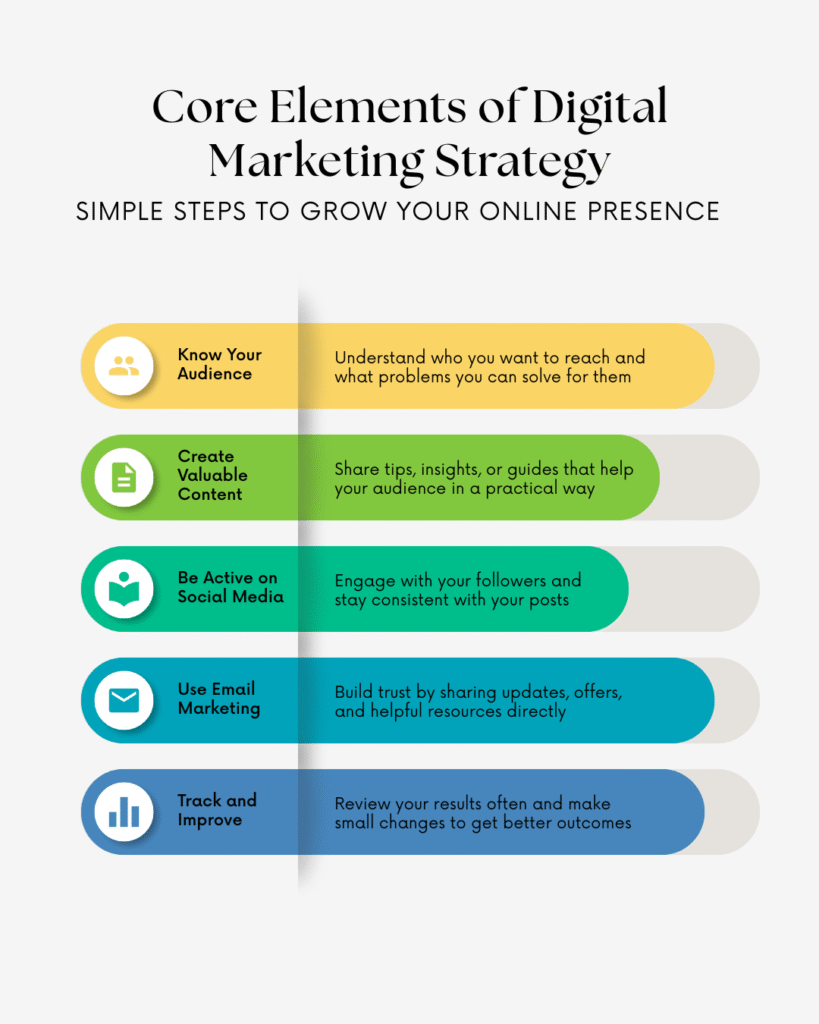
A digital marketing strategy is more than just choosing channels and publishing content. It requires a deep understanding of your business, goals, and audience. The core elements of an effective strategy include:
Audience Research and Persona Development
Understanding your audience is the cornerstone of any marketing strategy. You need to know:
1. Demographics: Age, gender, location, and income level.
2. Psychographics: Interests, challenges, and behavior patterns.
3. Buyer Journey: How they make purchasing decisions.
Create buyer personas to better understand your audience. A persona is a semi-fictional representation of your ideal customer based on market research and real data.
Defining Your Goals and KPIs
Your digital marketing strategy should have clear goals that align with your overall business objectives. Examples of goals include:
1. Increasing website traffic by 30% in the next 6 months
2. Generating 100 leads per month via content marketing
3. Improving social media engagement by 25% in the next quarter
Establish Key Performance Indicators (KPIs) to measure success. Common KPIs include website traffic, conversion rates, and social media engagement.
Choosing the Right Digital Channels
Not all digital marketing channels will work for your business. Focus on the channels that align with your target audience and business goals. Here are the most popular channels:
1. SEO: Helps you rank on search engines and drive organic traffic.
2. Social Media: Platforms like Instagram, Facebook, and LinkedIn help you build relationships with your audience.
3. PPC: Pay-per-click ads like Google Ads and Facebook Ads can help drive immediate traffic and sales.
4. Email Marketing: Send targeted messages to nurture leads and encourage conversions.
Content Planning
Content is the backbone of digital marketing. Your content strategy should include:
1. Blog posts, videos, and social media posts
2. E-books, case studies, and whitepapers
3. Educational content like webinars or podcasts
Analytics and Reporting
Monitor the success of your strategy through analytics tools like Google Analytics and social media insights. Measure important metrics like website traffic, bounce rates, and conversions. Use this data to make informed decisions and optimize campaigns.