

A digital marketing strategy is the blueprint for how your business will engage with its audience, drive traffic, generate leads, and ultimately increase sales online. In today’s world, having a clear strategy is essential, as the internet provides countless opportunities to connect with potential customers. However, with so many available channels—such as social media, content marketing, SEO, email campaigns, and paid ads—how do you know where to start and how to manage all of them?
This guide will walk you through creating and executing an effective digital marketing strategy. We’ll cover everything from defining your goals to choosing the right channels and measuring your results. Additionally, we’ll provide in-depth resources that will serve as supporting pages for each part of your strategy, allowing you to dive deeper into specific tactics like SEO, social media marketing, and content creation.
What Is Digital Marketing Strategy?
A digital marketing strategy is a comprehensive plan that defines how your business will use digital channels to meet specific marketing goals. These goals might include increasing brand awareness, driving website traffic, generating leads, or improving conversions.
The digital marketing strategy focuses on optimizing your online presence and utilizing a variety of online channels to engage and convert your audience.
Key Elements of Digital Marketing Strategy:
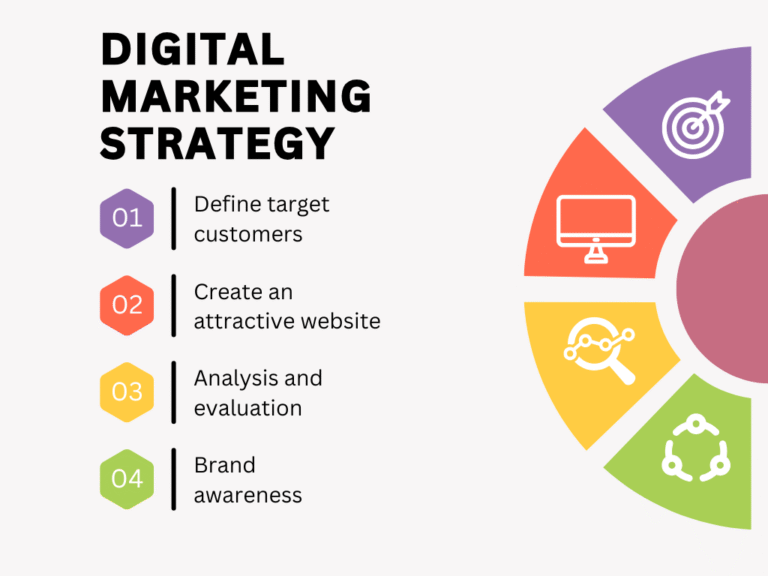
Market Research & Audience Understanding: Understanding who your audience is, where they are, and what challenges they face.
Clear Goals: Outlining measurable goals like increasing website traffic, improving sales, or building brand awareness.
Digital Channels: Deciding which channels (SEO, social media, email marketing, PPC) align best with your business objectives.
Analytics & Optimisation: Using data to track performance and continually optimize strategies for better results.
Core Elements of a Digital Marketing Strategy
Creating a successful digital marketing strategy involves understanding your audience and using the right tools and tactics to achieve business goals. Here are the core elements of digital marketing strategy:
Audience Research and Buyer Personas
Understanding your target audience is critical to tailoring your digital strategy. You need to know:
- Demographic details (age, gender, location)
- Interests and online behaviors
- Pain points and challenges
Defining Goals and KPIs
Digital marketing goals must align with business goals. Your strategy should include SMART (Specific, Measurable, Achievable, Relevant, and Time-bound) goals. Some examples:
- Increase website traffic by 30% in the next 6 months
- Generate 100 new leads per month via social media
- Improve conversion rate from 1.5% to 3%
Choosing the Right Digital Channels
Different digital channels serve different purposes. Here’s how to select the right one:
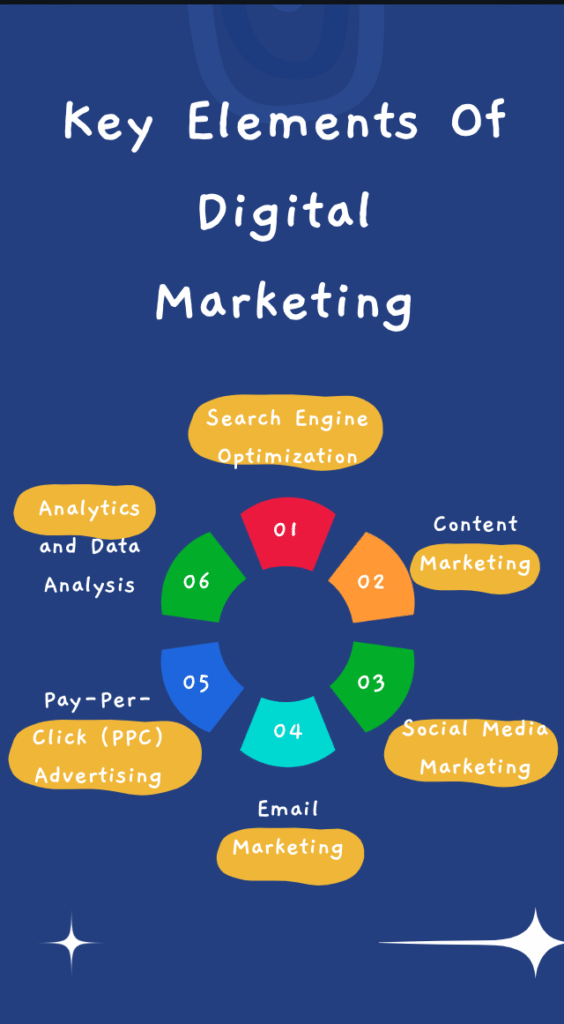
- SEO (Search Engine Optimisation): For driving organic traffic.
- Social Media: To engage and build brand loyalty.
- Email Marketing: For nurturing leads and retaining customers.
- PPC Advertising: For quick visibility and targeted outreach.
Creating a Content Plan
Content plays a central role in your digital marketing strategy. A content plan should include:
- Blog posts, videos, case studies, or webinars
- Social media posts and paid ads
- Resources like eBooks, templates, or whitepapers
How to Build Your Digital Marketing Strategy
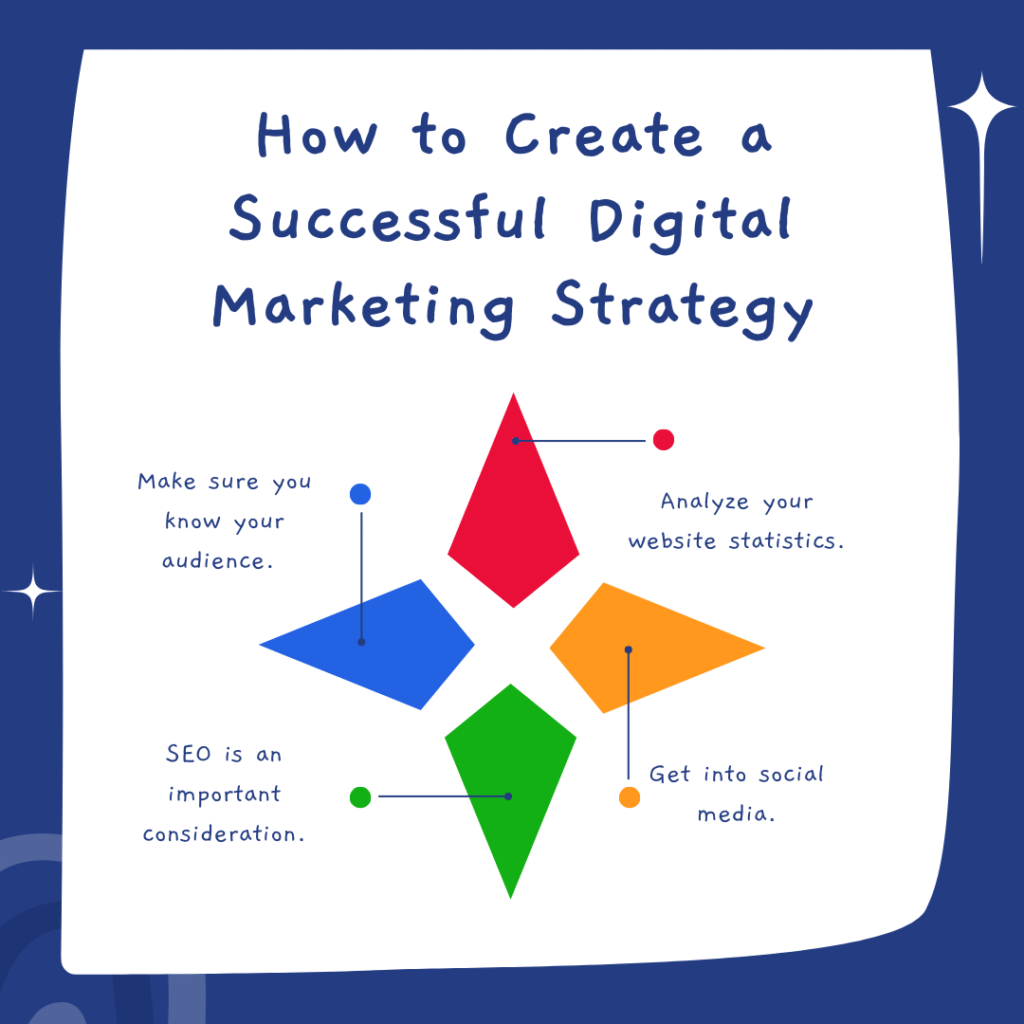
To built your digital marketing strategy, the following step are very important:
Conduct a Digital Marketing Audit
- Review your existing digital presence.
- Analyze website traffic, social media engagement, and sales data.
Set Clear Objectives
- Focus on key performance indicators (KPIs) such as lead generation, traffic, and sales.
Research Your Audience
- Create detailed buyer personas that reflect your ideal customers.
Choose Digital Marketing Channels
- Pick the channels that best serve your audience. For example, use Instagram for visual content, LinkedIn for B2B engagement, and Google Ads for targeted traffic.
Allocate Resources and Budget
- Ensure your team, time, and budget are aligned to meet objectives.
Develop Content and Implement Campaigns
- Create content that resonates with your audience.
- Launch campaigns that align with your goals.
Track and Measure Performance
- Regularly analyze results using tools like Google Analytics and make adjustments as needed.
The Most Effective Digital Marketing Channels
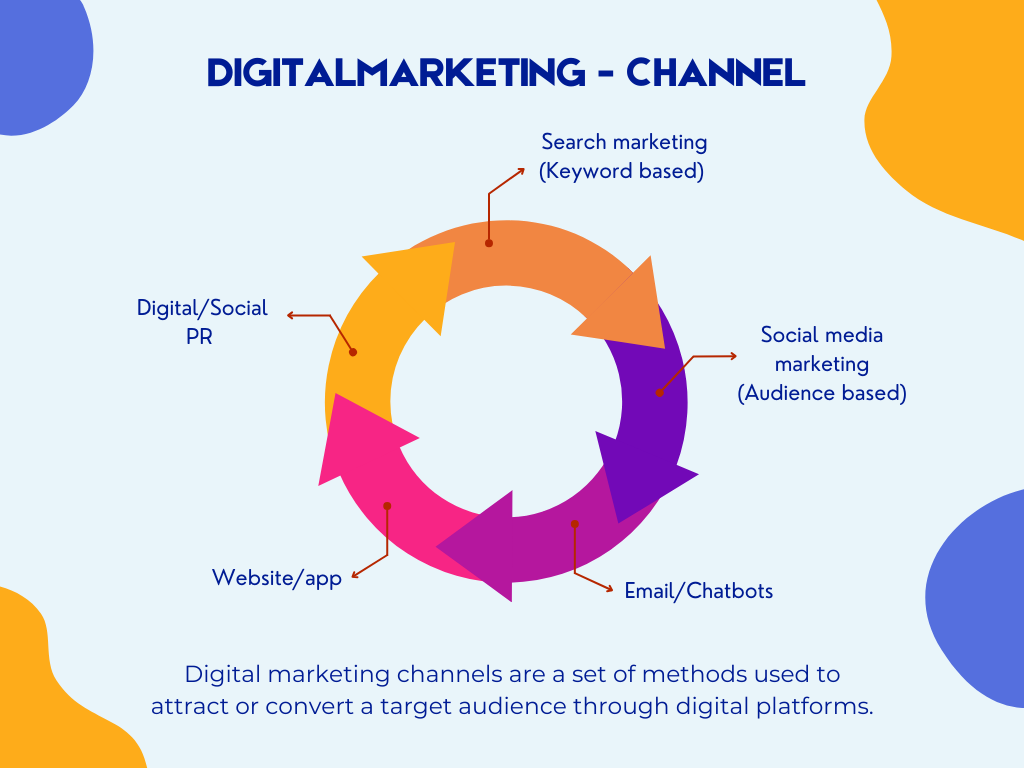
Digital marketing channels are the platforms through which you deliver your marketing messages. Here’s an overview of each channel:
SEO (Search Engine Optimization)
Focus on optimizing your website to rank higher on search engines like Google. A solid SEO strategy includes:
- Keyword Research: Finding keywords your target audience searches for.
- On-Page SEO: Optimizing meta tags, headings, and content.
- Technical SEO: Improving website speed, mobile-friendliness, and URL structure.
- Off-Page SEO: Building backlinks from reputable sites.
Content Marketing
Content marketing involves creating valuable, relevant content to attract and engage customers. This can include blogs, videos, eBooks, or infographics.
Social Media Marketing
Social platforms help you reach and interact with your audience. Successful social media marketing includes:
- Engaging content
- Running paid ads
- Building a community around your brand
Email Marketing
Email marketing is a powerful tool for nurturing leads and converting customers. It includes:
- Building an email list
- Segmenting the audience
- Crafting personalized messages
Paid Advertising (PPC)
PPC ads (such as Google Ads or Facebook Ads) allow you to target specific audiences. Track your ad performance and adjust based on conversions.
Influencer Marketing
Partnering with influencers in your niche can help boost brand awareness and credibility.
Tools and Technology
The right tools and technologies are essential for measuring and optimizing your digital marketing efforts. Key tools to use include:
Google Analytics: Tracks website traffic, user behavior, and conversions.
SEO Tools: Tools like SEMrush, Ahrefs, or Moz help with keyword research and backlink tracking.
Social Media Management Tools: Buffer or Hootsuite streamline social posting and engagement.
Email Marketing Platforms: Mailchimp, HubSpot, or Active Campaign help you build, automate, and track email campaigns.
Metrics and Measurement
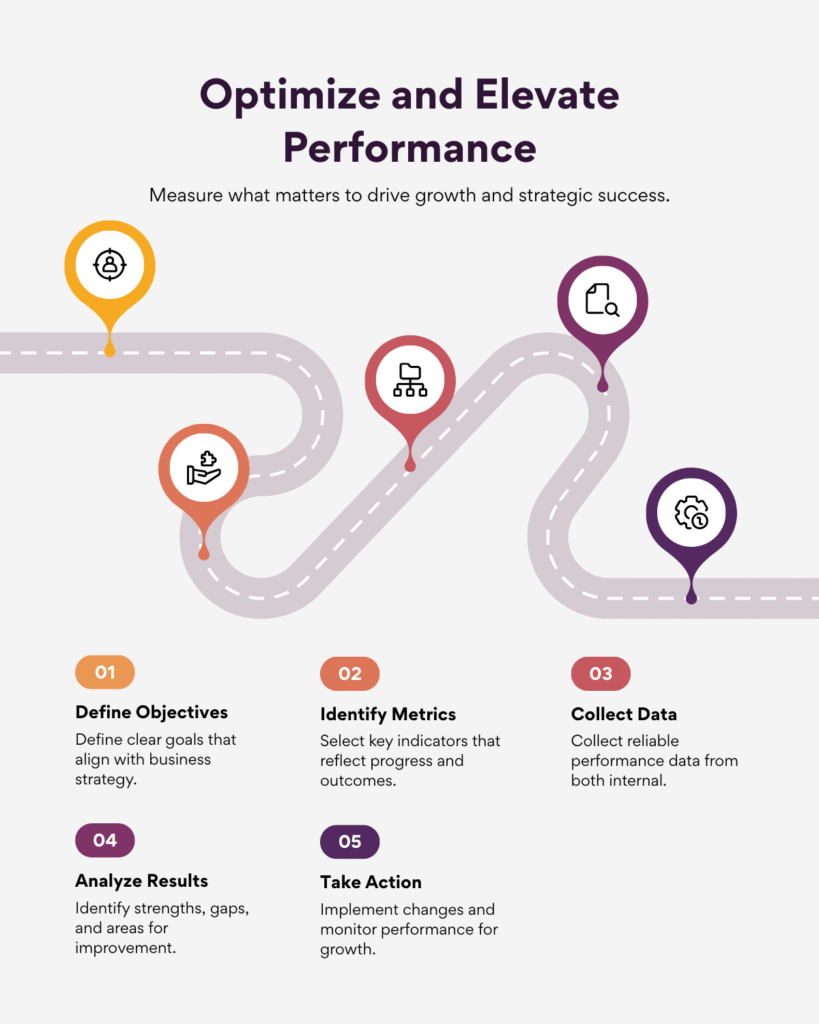
To ensure your strategy is effective, you must track and measure key performance indicators (KPIs):
Website Traffic: Monitor the number of visitors coming to your site.
Engagement Metrics: Track social media interactions like likes, shares, and comments.
Lead Generation: Measure how many people sign up for your email list or download resources.
Conversion Rate: Track how many visitors take the desired action (e.g., making a purchase or filling out a contact form).
Return on Investment (ROI): Calculate how much revenue is generated for every dollar spent on digital marketing efforts.
Summary and Next Steps
In summary, crafting an effective digital marketing strategy means clearly defining your goals, understanding your audience, choosing the right channels, and measuring performance with meaningful data. The next steps are to turn your strategy into action by creating a detailed execution plan, assigning responsibilities, and setting realistic timelines. Continuously test, analyze, and refine your campaigns based on results and changing market trends, ensuring your strategy stays flexible and focused on long-term growth and measurable impact.
Contact Us
Ready to Crush Your Growth Goals?
Let’s create a custom AI-driven marketing strategy that amplifies your leads, strengthens your brand, and powers your next stage of growth.